

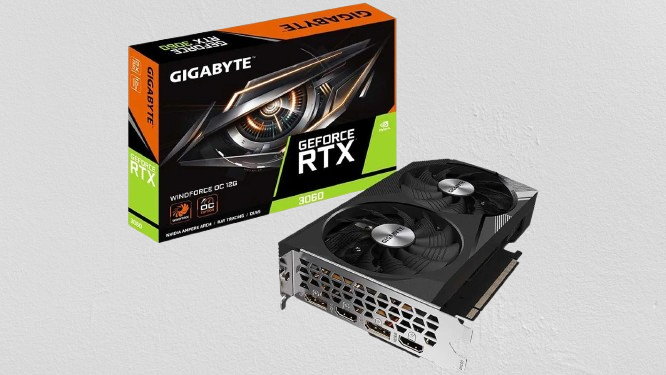
The RTX 3060 is a GPU that keeps coming up in conversations about value, and usually for good reason. I’ve been running the GIGABYTE Windforce OC variant in my gaming PC for about a year now. Before this I had a GTX 1070 which served me well for four years but was starting to show its limits in newer titles. Here’s what the upgrade actually felt like and whether the 3060 still makes sense as a purchase decision today.
Why the 3060 Still Gets Recommended
The GPU market is confusing right now. Newer cards exist RTX 4060, 4060 Ti, and above and the natural instinct is to wonder whether buying a previous generation card makes any sense. The argument for the 3060 comes down to one specific specification: 12GB of GDDR6 VRAM.
Most GPUs competing with the 3060 on price have 8GB VRAM. The 4060 base model launched with 8GB. The 3060 Ti has 8GB. The 3060 has 12GB. For a mid-range card that’s an unusual amount and it becomes relevant in ways that weren’t fully obvious two years ago but are increasingly obvious now.
Modern games are using more VRAM than before. Titles like Alan Wake 2, Hogwarts Legacy at high texture settings, and various others push into or past 8GB at higher resolutions. An 8GB card handles these by either dropping texture quality or stuttering. A 12GB card loads the textures and moves on. This isn’t theoretical I’ve watched my VRAM usage hit 10GB in certain titles at 1440p. On an 8GB card that would have been a problem.
1080p Performance Genuinely Excellent
At 1080p the 3060 is probably more GPU than most people need for current games. High to ultra settings in most titles, stable frame rates, no compromise required. Competitive games like Valorant and CS2 run at frames most monitors can’t even display. Story games and open-world titles run smoothly with everything turned up.
If 1080p is your target resolution and you game on a 60Hz or 144Hz monitor, this card will satisfy that for the next several years without upgrades or compromises. The only games that push it at 1080p are extremely demanding titles on ultra settings with ray tracing and turning ray tracing down or off recovers performance immediately.
1440p Where the 12GB VRAM Earns Its Keep
I game at 1440p on a 144Hz monitor. The honest picture is that the 3060 handles most games well at 1440p medium-high settings, struggles with some titles at ultra settings, and handles the VRAM side of things better than more expensive 8GB cards in texture-heavy scenarios.
Cyberpunk 2077 at 1440p high settings without ray tracing runs comfortably. With ray tracing at high the frame rate drops to ranges that need DLSS to feel smooth. Enabling DLSS Quality mode brings it back to a playable place with minimal visual difference. This is a common compromise at 1440p with the 3060 the raw rasterization performance is mid-tier but DLSS support means you’re not stuck accepting those raw numbers.
DLSS is genuinely good. Not a gimmick. Quality mode at 1440p is difficult to distinguish from native resolution in most games and the performance gains are significant. Having access to DLSS as a tool makes the 3060’s raw performance numbers less limiting than they appear on spec sheets.
The GIGABYTE Windforce OC Specific Model Notes
The dual-fan design keeps the card compact 28cm fits in mid-tower and even some smaller cases without issue. My previous card was longer and fitting it required removing a drive cage. The Windforce went in cleanly.
Temperatures under load sit around 70-75°C in my cabinet with decent airflow. Fan noise is audible during sustained gaming loads but not intrusive background game audio covers it completely. The fans spin down to zero at idle and low loads which means a completely silent desktop when not gaming, something I appreciate.
One year of use and the card behaves identically to when I installed it. No coil whine, no artifacts, no performance degradation. GIGABYTE’s build quality has been reliable in my experience.
Creative Work The VRAM Advantage Again
I do occasional video editing in DaVinci Resolve and some Blender rendering. The 12GB VRAM handles GPU-accelerated editing of 4K footage without the memory overflow warnings I used to get on smaller VRAM cards. Complex Blender scenes that would have crashed or severely slowed a 4GB or 6GB card process without drama.
If you’re purely a gamer this doesn’t matter. If you do any creative work involving GPU acceleration the 12GB makes the 3060 significantly more capable than its gaming benchmark position suggests.
Should You Buy This Over Newer Options?
Honest answer: it depends on availability and pricing.
If you can get an RTX 3060 for ₹26,000 to ₹28,000 and the RTX 4060 is priced at ₹35,000 or above the 3060 makes sense because the 4060’s rasterization improvement over the 3060 doesn’t justify a 25-30% price premium, especially given the 4060’s 8GB VRAM limitation.
If the price gap between 3060 and 4060 is small say ₹3,000 to ₹4,000 the 4060 is worth considering for better efficiency and newer architecture features. The 4060 Ti with 8GB sits above both and has better raw performance but the VRAM concern remains.
The RTX 4060 Ti 16GB version addresses the VRAM problem but costs significantly more. At current Indian pricing the 3060’s 12GB at ₹26,000 to ₹28,000 remains a genuinely compelling value proposition that newer cards haven’t cleanly displaced.
Who This Card Is Actually For
1080p gamers who want headroom: the 3060 is more than you need today and will stay relevant longer than cheaper 8GB options at higher resolutions.
1440p gamers on a budget: workable with settings adjustments and DLSS, comfortable with the knowledge that 12GB means texture-heavy games won’t suddenly become unplayable as requirements increase.
Creator-gamers: the 12GB VRAM genuinely improves GPU-accelerated creative workloads in ways that make the card more versatile than its gaming tier position implies.
4K gamers: the 3060 will struggle here. Not the right tool for consistent 4K gaming look at RTX 3080 or 4070 territory.
Price
₹26,000 to ₹28,000 for the GIGABYTE Windforce OC and similar 3060 variants on Amazon and Flipkart. Prices fluctuate worth checking both platforms before buying as the difference between them can be ₹1,000 to ₹2,000 at any given time. Don’t pay above ₹28,000 for a standard 3060 without a compelling reason.
GIGABYTE RTX 3060 Windforce OC Full Specifications
| Category | Details |
|---|---|
| GPU | NVIDIA GeForce RTX 3060 |
| Model | GIGABYTE Windforce OC |
| VRAM | 12GB GDDR6 |
| Memory Clock | 15000 MHz |
| Interface | PCI-Express x16 |
| Max Resolution | 7680 × 4320 (8K) |
| Display Output | HDMI |
| Cooling | Dual Fan (Windforce) |
| Dimensions | 28 × 6 cm, 39mm height |
| Weight | 0.67 kg |
| Compatible With | Desktop PCs |
| Warranty | 1 Year |
| Manufacturer | GIGABYTE |
Questions about whether this fits your specific build or use case drop them in the comments.
