

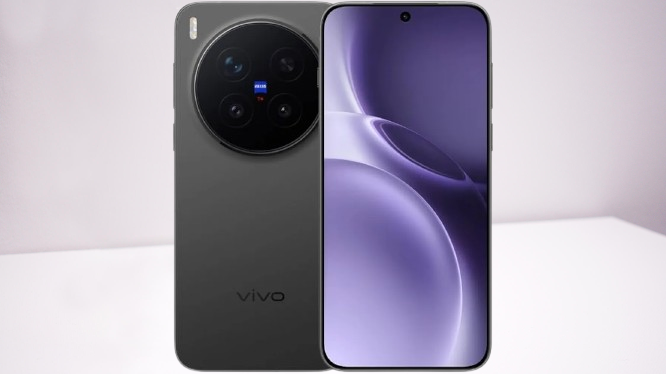
The Vivo X300 Pro hasn’t launched in India yet at the time of writing this is based on the Chinese launch and hands-on coverage from that market. I want to be clear about that before getting into what the phone actually offers, because there’s a lot of noise around this one and some of it deserves to be examined carefully.
The ZEISS Question Let’s Actually Address It
Every review of this phone leads with ZEISS and the implication is usually that the name alone explains why the cameras are good. That’s worth unpacking because it creates unrealistic expectations.
ZEISS doesn’t manufacture the image sensors in this phone. What the partnership brings is optical coating on the lenses, input on color science and tuning, and the right to use the ZEISS name. The result is images that tend toward accuracy and natural rendering rather than the aggressive processing that some Chinese flagship cameras apply. Colors look like what you pointed the camera at. Skin tones render realistically. The processing doesn’t try to make everything look better than it was.
Whether that’s worth choosing this phone over alternatives depends on whether you value accuracy over impact. Samsung and some Xiaomi cameras produce images that pop more in a quick scroll through your gallery. Pixel and Vivo X-series produce images that look more like what the scene actually looked like. Both approaches have their audience.
The Camera System Specifically
Three rear cameras. The 50MP main sensor at f/1.57 is the widest aperture at this class which genuinely matters for low-light performance wider aperture means more light hits the sensor. Early samples from the Chinese launch show night shots that retain color and detail without the artificial brightening that cheaper night modes produce.
The 50MP ultra-wide maintains color consistency with the main camera. This is harder to achieve than it sounds ultra-wide cameras on many phones have a noticeable color and exposure shift compared to the main sensor. Vivo’s tuning here appears consistent across both lenses.
The 200MP telephoto is the headline spec and it delivers on extreme zoom scenarios long-distance shots retain detail that would be blurry mush on most phones. Practical zoom up to around 10× produces genuinely usable images. Beyond that you’re in documentation territory rather than photography territory, but having the option is still useful.
Portrait mode edge detection the separation between subject and background is where ZEISS tuning shows most clearly. Hair, fabric edges, complex backgrounds the separation looks optical rather than computational in samples reviewed from the Chinese launch. This is harder to achieve than raw megapixel counts and more relevant to actual daily shooting.
The Display 4500 Nits Is Not Marketing
The 6.78-inch Q10+ AMOLED with 4500 nits peak brightness is one of the highest brightness figures on any current smartphone. 4500 nits means outdoor visibility in direct sunlight genuinely readable without shading the screen or squinting. The LTPO panel drops to 1Hz for static content and ramps to 120Hz for scrolling, which is the right battery efficiency trade-off for this display size.
P3 wide color gamut covers the color space used by most HDR streaming content. The display is the right canvas for the camera system if you’re taking high quality photos you want a display that shows them accurately.
Performance and Battery
Dimensity 9500 on 3nm with 16GB LPDDR5X RAM and 512GB UFS 4.1 storage. This is current top-tier mobile hardware. Everything will be fast. Gaming, multitasking, camera processing, video editing none of it will be the bottleneck. That’s simply true of any phone with this chipset.
6510mAh is a large battery housed in a phone that’s 7.99mm thin and 226 grams. That’s an engineering achievement large energy storage in a slim form factor. Heavy use days should end comfortably with remaining charge based on Chinese launch battery testing. Moderate use should push toward a day and a half.
90W wired charging with the charger included in the box. At 90W a 6510mAh battery charges in roughly 40 to 45 minutes genuinely fast for the capacity. 40W wireless charging is above average for wireless speeds.
IP68 and IP69 Dual Rating
IP68 covers sustained water immersion. IP69 covers high-pressure water jets. Having both is more thorough protection than the single IP68 most flagships carry. For a premium phone you’ll use for two or three years the additional durability certification is meaningful.
The Ultrasonic Fingerprint Sensor
Ultrasonic fingerprint sensors work through wet fingers and in varied lighting conditions. Optical sensors the standard on most phones struggle with wet fingers and very bright ambient light. In daily use this means the phone unlocks reliably in situations where optical sensors require a retry. Small difference that becomes noticeable over years of daily use.
Expected India Price and Who This Is For
Expected between ₹85,000 and ₹1,10,000 for the 16GB + 512GB variant when it launches in India. This is flagship territory placing it alongside Samsung Galaxy S25+ and approaching iPhone 16 Pro pricing.
At this price range the camera system is the reason to choose Vivo X300 Pro over alternatives. The battery size is a genuine differentiator Samsung Galaxy S25 has a 4000mAh battery at similar pricing. The display brightness is class-leading. The performance is equivalent to all current flagships.
If you’re deeply in the Samsung or Apple ecosystem the switching cost is real and the hardware advantages may not outweigh that. If you’re open to switching or currently on Android without strong ecosystem ties the X300 Pro’s camera system and battery at its expected price make a compelling case for photography-focused buyers.
We’ll update this article with confirmed India pricing and availability when the official launch happens.
Vivo X300 Pro Full Specifications
| Category | Details |
|---|---|
| Display | 6.78″ Q10+ AMOLED, 2800 × 1260, LTPO 1–120Hz, 452 PPI, 4500 nits peak, P3 |
| Processor | Dimensity 9500 (3nm), Octa-core up to 4.21GHz |
| RAM and Storage | 16GB LPDDR5X + 512GB UFS 4.1, Virtual RAM +16GB |
| OS | OriginOS 6 (Android 16) |
| Rear Cameras | 50MP f/1.57 + 50MP f/2.0 Ultra-wide + 200MP f/2.67 Telephoto (ZEISS) |
| Front Camera | 50MP f/2.0 |
| Battery | 6510mAh |
| Charging | 90W FlashCharge (included) + 40W Wireless |
| Build | Glass back, 7.99mm, 226g |
| IP Rating | IP68 and IP69 |
| Fingerprint | Ultrasonic 3D In-display |
| Connectivity | Wi-Fi 7, Bluetooth 6.0, NFC, USB 3.2, 5G Dual SIM, eSIM |
| Colours | Dune Brown, Phantom Black |
| Box Contents | Phone, 90W Charger, USB Cable, Case, Screen Protector, Eject Tool |
| Expected India Price | ₹85,000 to ₹1,10,000 to be confirmed at official India launch |
Questions about how it compares to specific alternatives at this price range drop them in the comments.
